
GSTN Releases FAQs on 57th GST Council Recommendations
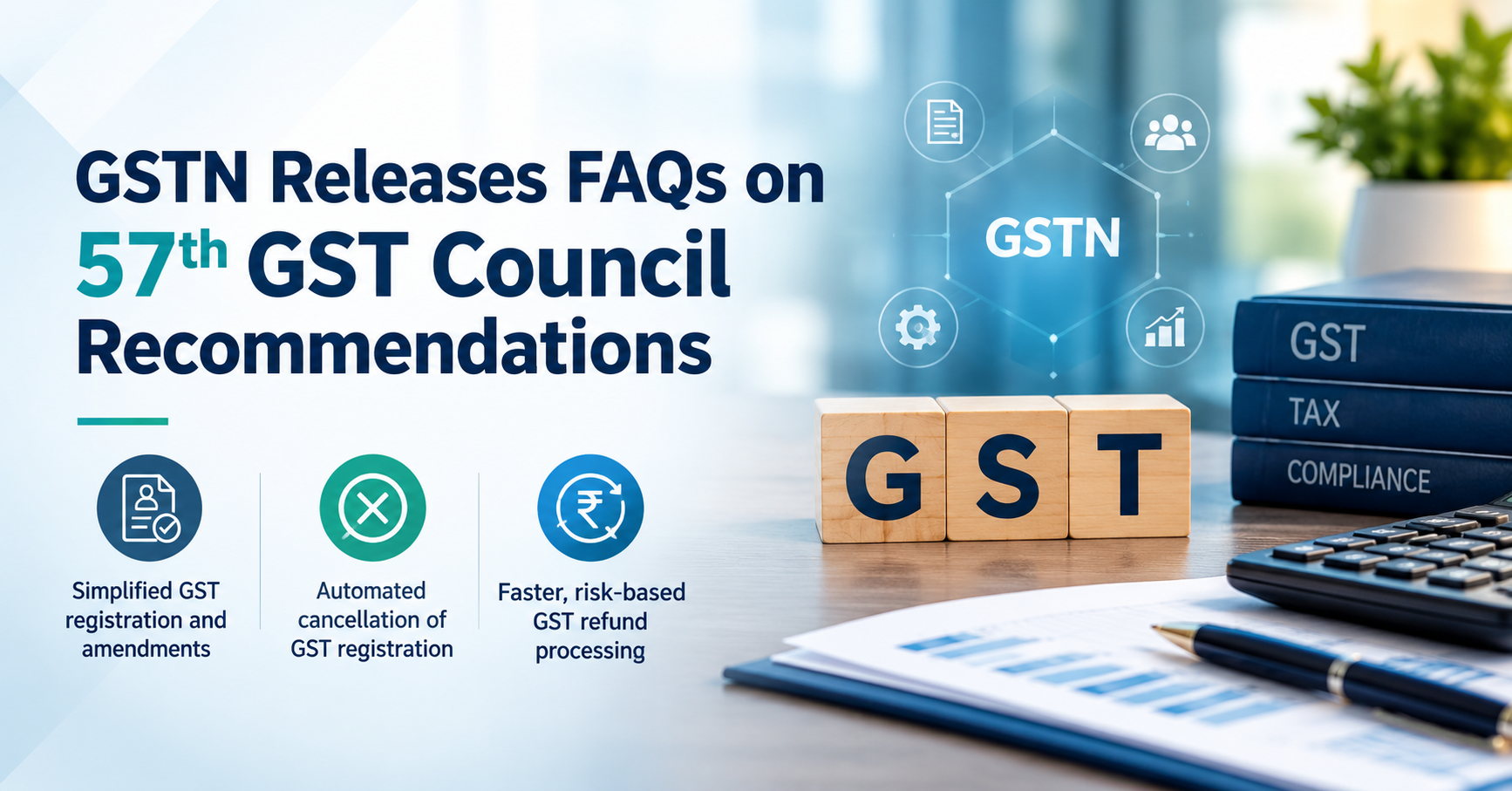
GSTN Issues FAQs on 57th GST Council Recommendations: Key GST Updates for Businesses
The Goods and Services Tax Network (GSTN) has issued Frequently Asked Questions (FAQs) explaining the recommendations made at the 57th GST Council meeting held on 8 October 2026. The clarifications cover GST registration, refunds, input tax credit (ITC), tax classification, litigation management and e-way bill procedures, with a focus on simplifying compliance and improving ease of doing business.
1. Simplified GST Registration and Amendments
The FAQs explain proposed improvements to the GST registration process, including clearer documentation requirements, enhanced online guidance and automated processing of certain amendments.
-
Changes to the legal name, business constitution and additional place of business are proposed to be processed automatically, subject to prescribed conditions.
Need help with this? Talk to Servunity Financial Solutions → -
Registration applications are expected to benefit from clearer checklists, dropdown menus and guidance on supporting documents.
-
For eligible registrations under Rule 14A of the CGST Rules, 2017, amendments to the principal place of business are also proposed to follow an automated process.
These measures aim to reduce procedural delays and improve consistency in registration processing.
2. Automated Cancellation of GST Registration
The Council has recommended system-based cancellation in specified non-compliance cases, including certain instances involving prolonged non-filing of returns or failure to furnish bank account details.
The FAQs also describe a proposed system-based revocation facility, subject to compliance with the applicable requirements and filing the prescribed application within the specified period.
Taxpayers should continue monitoring GST portal notices, outstanding returns and registration status to avoid disruptions.
3. Faster, Risk-Based GST Refund Processing
A key proposal is the introduction of automated, risk-based refund processing for eligible categories.
-
Eligible low-risk claims involving zero-rated supplies and inverted duty structure may receive an automated provisional refund of 90% of the claimed amount.
-
The proposed timeline for system-generated provisional refund orders is three working days after acknowledgement.
-
Refund applications may be deemed acknowledged if the prescribed acknowledgement or deficiency memo is not issued within 10 days, subject to the applicable framework.
-
Final scrutiny and sanction will continue as prescribed, including cases requiring officer intervention.
These measures are intended to improve transparency and ease working-capital pressures.
4. Proposed Changes in ITC Refunds
The Council has recommended expanding the ITC considered for eligible refunds under Rule 89 of the CGST Rules, 2017.
The proposals include:
-
Including eligible ITC on input services availed on or after 1 November 2026 when calculating refunds under the inverted duty structure mechanism.
-
Including eligible ITC on capital goods, attributable to the relevant period, for specified refund claims from 1 April 2027.
Eligibility conditions and statutory restrictions will continue to apply.
5. GST Rates, Classification and Compliance Reforms
The FAQs clarify the classification of certain products, including seaweed-extract-based bio-stimulants and sublimation paper. These clarifications are intended to address disputes over applicable GST treatment.
The Council has also recommended reforms concerning litigation management, prosecution provisions and interception of goods in transit. Proposed e-way bill reforms aim to restrict routine interception and clarify the jurisdiction of officers, while retaining enforcement powers in prescribed cases.
Important Note on Implementation
These FAQs explain the recommendations of the 57th GST Council meeting. Recommendations and proposed amendments should not automatically be treated as operative law. Their implementation is subject to the applicable legal amendments, notifications and effective dates.
Businesses should review the official FAQs and monitor subsequent CBIC notifications before changing their GST compliance procedures.
For expert guidance on this topic, contact your tax professional today.
Have Questions? We're Here to Help
Get expert advice from Servunity Financial Solutions. Reach out to discuss your requirements.